
How Buyers Finance Purchasing a Business.
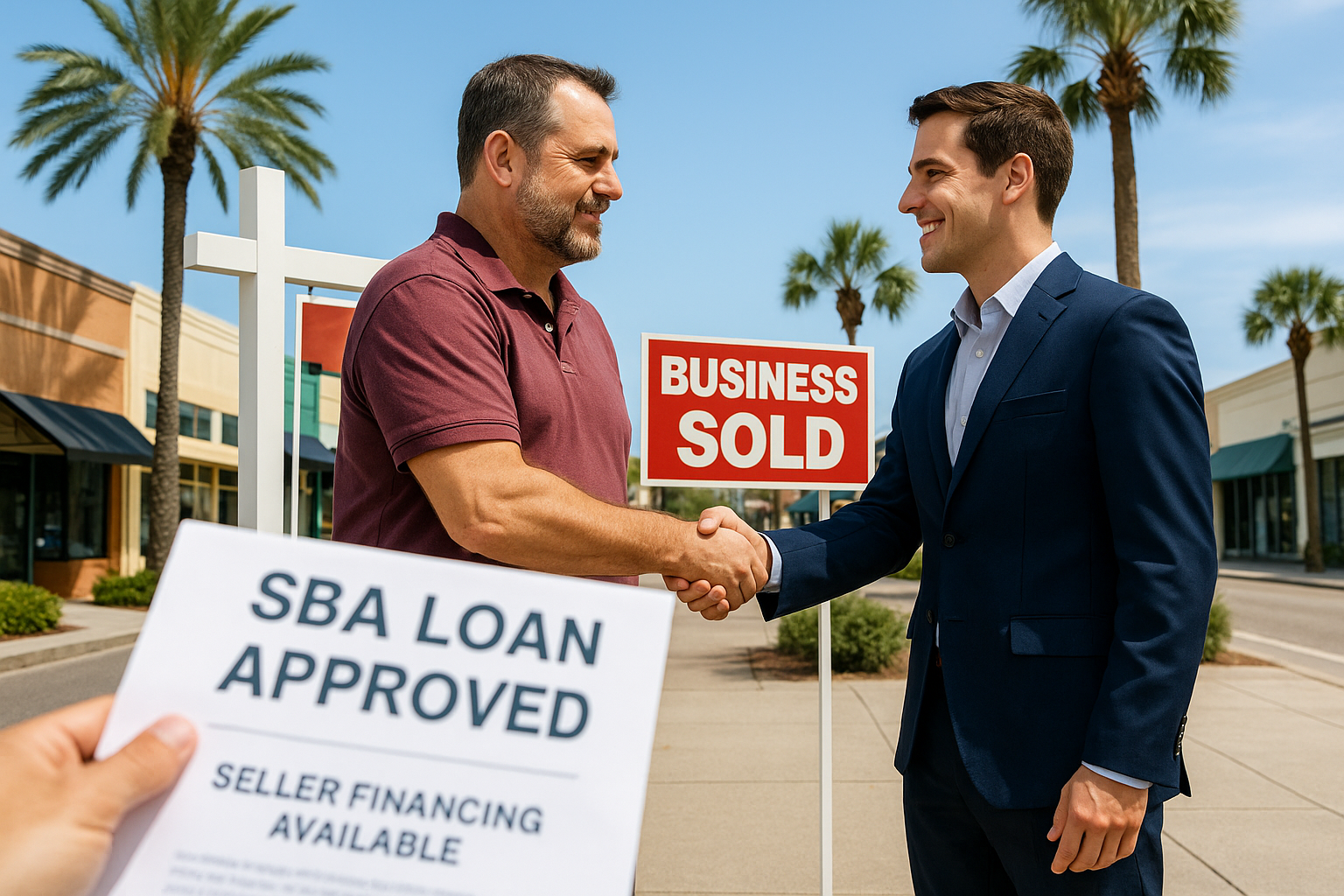
Many people assume they cannot afford to buy a business. In reality, a large percentage of small business acquisitions are financed using SBA loans and structured financing options.This guide explains the basics of business acquisition financing and how buyers secure funding.

The Common Ways Buyers Finance a Business Purchase.
Most business acquisitions involve a combination of financing sources.
Rarely does a buyer pay entirely in cash.
The most common financing structures include:
• SBA loans
• Seller financing
• Conventional bank loans
• Rollover for Business Startups (ROBS) retirement funding
• Investor capital or partnerships
The structure of the financing depends on the size of the business, the buyer’s financial position, and the lender’s underwriting requirements.
SBA Loans for Buying a Business.
Small Business Administration (SBA) loans are one of the most common ways buyers finance business acquisitions.
These loans are issued by banks and lending institutions but are partially guaranteed by the SBA, which reduces risk for lenders.
Because of this guarantee, SBA loans often allow buyers to purchase a business with a lower down payment compared to traditional commercial loans.
Typical SBA loan characteristics:
• Down payment typically 10–20%
• Loan terms often 10 years
• Competitive interest rates
• Available for many small business acquisitions
Typical Down Payment Requirements.
The amount of capital required depends on the lender and deal structure.
In many SBA-financed transactions, buyers are expected to contribute approximately 10% to 20% of the purchase price.
For example:
$500,000 business purchase
Buyer investment: $50,000 – $100,000
Remaining balance financed through SBA lending and potentially seller financing.
How Long SBA Financing Takes.
Most SBA-financed acquisitions take between 45 and 90 days to complete.
The timeline includes:
-
Initial loan application Underwriting review
-
Business financial analysis
-
Loan approval and closing preparation
Connect With SBA Lending Partners.
If you are considering purchasing a business and want to explore financing options, you may speak with lenders who specialize in SBA business acquisition loans.
These lenders can review your financial profile and help determine what level of acquisition financing may be available to you.
SBA Financing for Service Businesses
Specialized lending solutions for established service companies such as HVAC, plumbing, landscaping, healthcare, and other owner-operated businesses with strong cash flow and operating history.
Financing for Restaurants and Bars
Funding options designed for full-service restaurants, bars, cafés, and hospitality businesses. Lenders experienced with food service operations and industry-specific financial structures.
Lending for Digital and Online Businesses
Financing programs for digital companies including SaaS platforms, e-commerce brands, Amazon FBA businesses, Shopify stores, and other technology-driven operations with recurring revenue.
Financing for Manufacturing Companies
Loan programs designed for manufacturing and production businesses, including companies with specialized equipment, supply chains, and established commercial client relationships.

Commercial Real Estate Business Financing
Financing options for businesses that include commercial real estate as part of the transaction, such as warehouses, industrial properties, retail locations, or mixed-use business facilities.
Business Acquisition Refinancing
Solutions for business owners seeking to refinance existing business debt, restructure financing, or improve loan terms following a completed acquisition or ownership transition.
Financing a Business Purchase in the Tampa Bay Area
Many business acquisitions in Florida are financed through SBA-backed loans or other structured financing solutions. Buyers exploring the purchase of an established company often begin by researching how business acquisition financing works before making an offer.
In many cases, lenders review the financial performance of the business being acquired along with the buyer’s financial profile. The goal is to determine whether the business generates enough cash flow to support loan repayment while still providing income for the new owner.
Entrepreneurs searching for businesses for sale in the Tampa Bay region—including Hillsborough, Pasco, Pinellas, and Hernando counties—frequently work with lenders who specialize in financing small business acquisitions. These lenders understand the underwriting process for established businesses and can often help buyers determine what level of acquisition financing may be available.
Working with experienced advisors, lenders, and transaction professionals can help buyers better understand financing structures, evaluate potential opportunities, and navigate the process of purchasing an established business.
Many buyers are surprised to learn that purchasing an established business can sometimes require less capital than starting one from scratch, especially when financing options such as SBA-backed loans and structured seller financing are available.
Lobo Business Sales LLC works with entrepreneurs and business owners throughout the Tampa Bay region, including Hillsborough, Pasco, Pinellas, and Hernando counties.
Can you buy a business using an SBA loan?
Yes. Many small business acquisitions in the United States are financed using loans backed by the Small Business Administration (SBA).
These loans are issued by participating banks and lenders, but the SBA provides a partial guarantee, which reduces risk for the lender.
Because of this structure, qualified buyers may be able to purchase an established business with a lower down payment than traditional commercial loans.
How much money do you need for a down payment when buying a business?
In many SBA-financed transactions, buyers are typically expected to contribute between 10% and 20% of the total purchase price.
The exact amount depends on the lender, the financial strength of the buyer, and the stability of the business being acquired.
In some cases, seller financing may also be used as part of the required equity injection.
What credit score is usually required for an SBA business acquisition loan?
While requirements vary by lender, most SBA lenders prefer buyers with a personal credit score of 680 or higher.
Strong credit history, manageable personal debt levels, and responsible financial behavior all improve the likelihood of loan approval.
How long does SBA financing take when buying a business?
The typical timeline for an SBA-financed business acquisition is 45 to 90 days from the time a complete loan application is submitted.
This time frame includes lender underwriting, review of the business financials, SBA authorization, and preparation for closing.
What do lenders look for when approving a business acquisition loan?
Lenders evaluate several factors when reviewing a loan application, including:
• Personal credit history
• Available funds for the down payment
• Industry experience or transferable management skills
• The financial performance of the business being purchased
• Cash flow available to service the loan
A profitable and well-documented business can significantly strengthen a loan application.
Can seller financing be combined with SBA loans?
Yes. Seller financing is sometimes used alongside SBA loans to help structure a transaction.
In certain deals, a portion of the purchase price may be financed by the seller, which can help bridge valuation gaps and demonstrate the seller’s confidence in the continued success of the business.
What types of businesses qualify for SBA acquisition financing?
Many established small businesses can qualify for SBA-backed financing if they demonstrate stable revenue and sufficient cash flow to support loan payments.
Common examples include service businesses, manufacturing companies, distribution businesses, healthcare practices, and certain franchises.
The business generally must have reliable financial records, a history of profitability, and the ability to support the buyer’s loan repayment through operating cash flow.
Can you use an SBA loan to buy a franchise or existing franchise location?
Yes. SBA loans are commonly used to purchase existing franchise businesses and, in some cases, to open new franchise locations.
Many national franchise brands appear on the SBA Franchise Directory, which can simplify the lending process for qualified buyers.
However, lenders still evaluate the buyer’s financial profile, experience, and the projected performance of the franchise location before approving financing.
Are there businesses that do not qualify for SBA financing?
Yes. Certain businesses may not qualify for SBA-backed loans depending on industry restrictions or financial performance.
For example, lenders may avoid businesses that lack documented financial records, show inconsistent profitability, or operate in industries that fall outside SBA eligibility guidelines.
Each lender has its own underwriting standards, so it is important for buyers to speak with an experienced SBA lending specialist to determine eligibility.
Meet your Professional Business Broker in Tampa
Dave Britton, CBI
Licensed Business Broker | Certified Business Intermediary
Serving Tampa, FL (Hillsborough, Pasco, Pinellas, Hernando, Polk)
Founder, Lobo Business Sales LLC
(813) 395-9552
Dave Britton is a Certified Business Intermediary (CBI) and founder of Lobo Business Sales LLC, a Florida business brokerage firm specializing in the sale and acquisition of privately held companies. Based in the Tampa Bay area, Dave works with business owners, buyers, lenders, attorneys, and CPAs to guide transactions from initial valuation through closing.
He focuses primarily on small to lower-middle-market businesses, typically representing companies with enterprise values ranging from approximately $500,000 to $10 million. His work includes business valuation, confidential marketing of businesses for sale, buyer qualification, and coordinating financing structures including SBA-backed acquisitions.
Through Lobo Business Sales LLC, Dave supports entrepreneurs and business owners throughout the Tampa Bay region, including Hillsborough, Pasco, Pinellas, and Hernando counties.