
![[HERO] Tampa Restaurant Owners: Are You Making These 5 Fatal Mistakes When Selling Your Business? (Spoiler: Your 'Comps' Don't Matter)](https://cdn.marblism.com/Tj_24Xg-gIq.webp)
You've spent years, maybe decades, pouring your blood, sweat, and burnt midnight oil into building your Tampa restaurant. Early mornings at the produce market. Late nights balancing books. Staffing nightmares. Supply chain chaos. Health inspections. Irate Yelp reviews.
And now you're ready to exit.
Maybe you want to retire. Maybe you're burned out. Maybe you just want your life back.
But here's the unfiltered truth that most successful restaurant owners aren't told until it's too late:
The way you sell your restaurant will determine whether you walk away with life-changing money… or bitter regret.
I've seen too many talented Tampa restaurant owners make the same avoidable mistakes, and watch six or seven figures vanish because they didn't know what they didn't know.
Let's fix that right now.
❌ Mistake #1: Over-Reliance on "Comps" (Your Neighbor's Sale Price Doesn't Matter)

This is the #1 myth that costs restaurant owners serious cash.
You hear that the Italian place down the street sold for $850K. Your buddy's sports bar in Ybor fetched $1.2M. So you think, "My place should be worth at least that much, right?"
Wrong.
Here's what actually drives restaurant value in Tampa (or anywhere else):
Cash Flow, Not Comps
Your restaurant is worth what it produces, not what another business sold for.
Buyers, especially SBA-backed buyers, which make up the majority of restaurant transactions, care about one thing above all else:
Seller's Discretionary Earnings (SDE).
That's your net profit + owner salary + interest + depreciation + one-time expenses.
A typical Tampa restaurant sells for 1.8x–3.5x SDE, depending on:
- Lease terms (how many years left, rent as % of revenue)
- Location and foot traffic
- Systems and management depth
- Equipment condition
- Brand reputation
- Growth potential
If your SDE is $250K, your restaurant is probably worth $450K–$875K, regardless of what the place next door sold for.
If the Italian joint had $350K SDE and sold for $850K, that's a 2.4x multiple. Your comp is irrelevant if your cash flow is different.
Bottom line: Buyers don't buy comps. They buy cash flow. Get your books clean, your SDE maximized, and your story straight, then we talk price.
❌ Mistake #2: Leaking the News (The Fastest Way to Kill Your Business and Your Deal)

Let's say you quietly list your restaurant for sale. You think you're being discreet.
Then a line cook overhears something. A server sees a buyer touring during off-hours. A vendor mentions they heard a rumor.
Suddenly, everyone knows.
And here's what happens next:
✅ Staff panic. Your best manager starts interviewing elsewhere. Your head chef jumps ship. Morale craters.
✅ Customers worry. Regulars stop coming. Private events get canceled. Revenue drops.
✅ Competitors pounce. They start poaching your team and bad-mouthing your "failing" business.
✅ Buyers walk. When they see performance tanking, they either lowball you or disappear entirely.
I've watched six-figure deals evaporate because word got out too early.
Here's What Smart Sellers in Tampa Are Doing Instead:
- Work with a licensed business broker (not a residential agent who doesn't understand confidentiality).
- Use blind listings that don't reveal your name or exact location.
- Schedule buyer tours during off-hours or closed days.
- Never tell staff until a deal is signed and funded.
- Control the narrative with a professional transition plan after closing.
Confidentiality isn't optional. It's survival.
❌ Mistake #3: Messy Books (How Poor Documentation Kills SBA Financing)
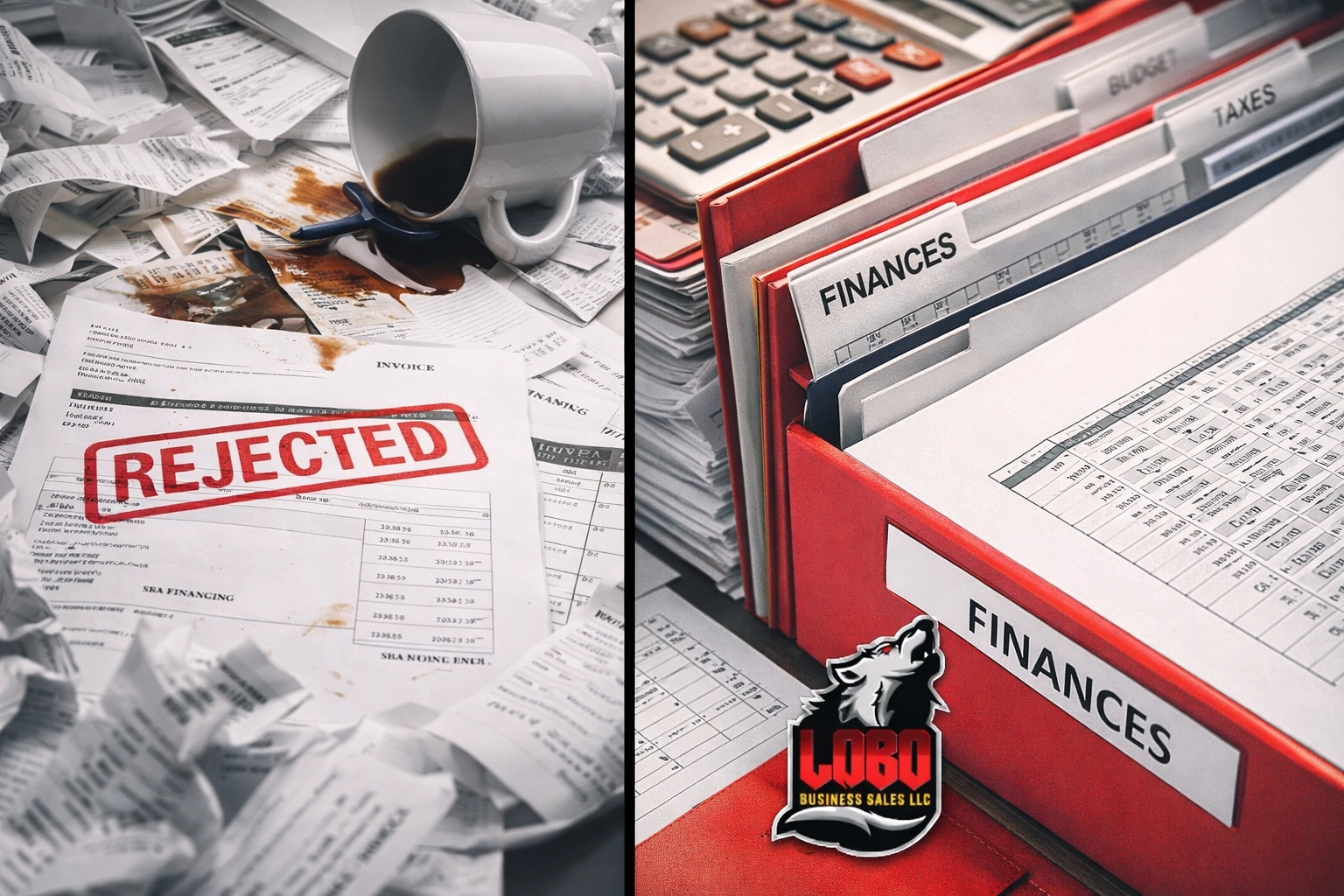
You know your numbers. You've got QuickBooks… sort of. Your tax returns are "around here somewhere." Your P&Ls are… well, they exist.
Here's the problem:
If you can't prove your cash flow, buyers can't get financing.
And if they can't get financing, they can't buy your restaurant.
Why SBA Lenders Reject Restaurant Deals:
❌ Incomplete or inconsistent financial records
❌ Missing tax returns or late filings
❌ Cash transactions with no documentation
❌ Personal and business expenses mixed together
❌ No clear trail for SDE add-backs
SBA lenders are hyper-conservative. They want three years of clean tax returns, accurate P&Ls, documented cash flow, and a business that looks like a business: not a side hustle.
If your books are a mess, you will not close.
What You Need Before You List:
✅ Three years of business and personal tax returns
✅ Monthly P&Ls and balance sheets
✅ Detailed list of SDE add-backs with proof
✅ Lease agreement and assignment terms
✅ Equipment list with values
✅ Vendor contracts, licenses, and permits
Get this done before you go to market. Don't lose a buyer (and your deal) because you can't find last year's 1040.
❌ Mistake #4: Selling a Job, Not a Business (Why Owner-Dependent Restaurants Don't Sell)
Let me guess:
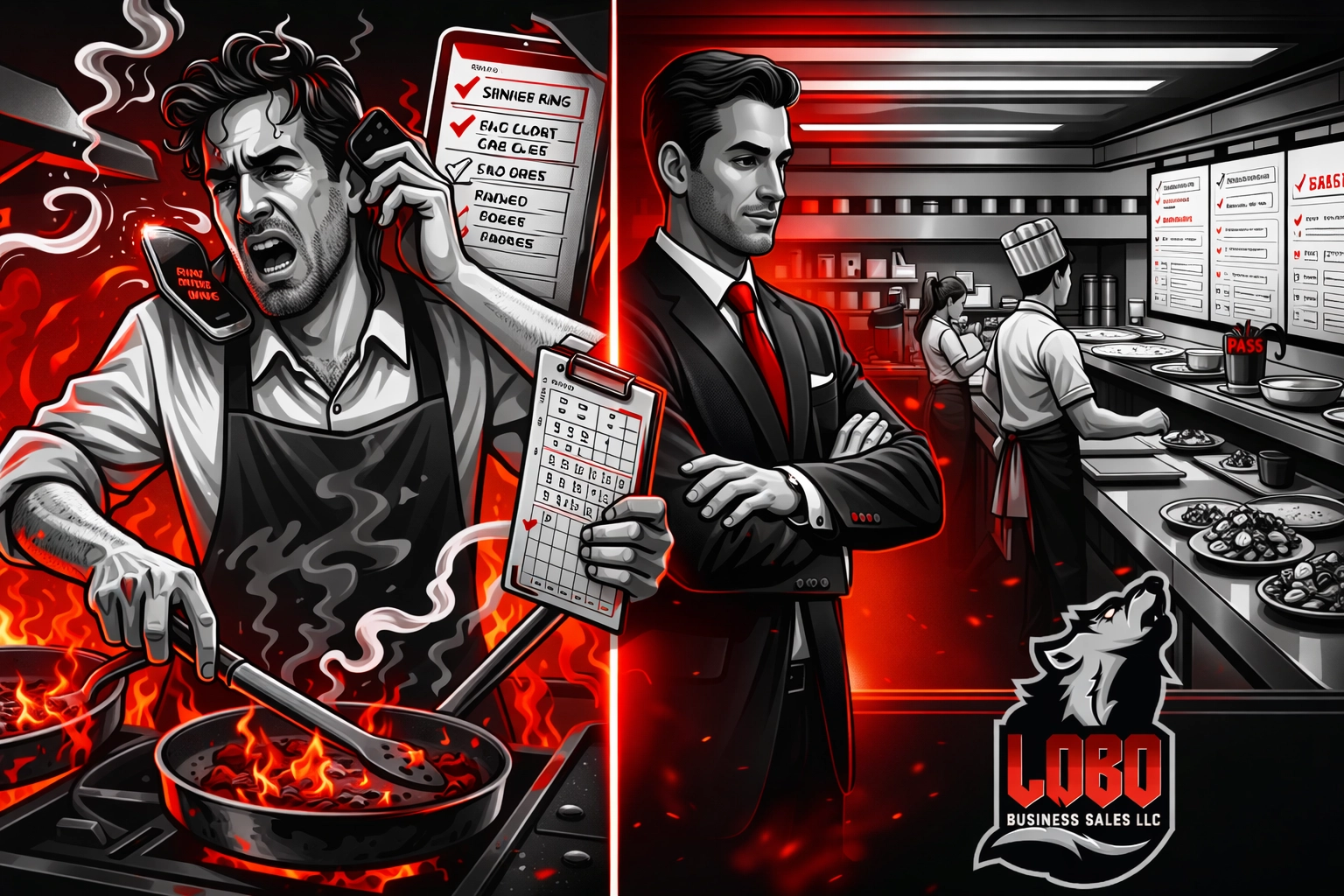
You're the chef. You're the manager. You handle ordering, scheduling, payroll, and customer complaints. You open. You close. You're the reason the place runs.
Congratulations: you don't own a business. You own a job.
And jobs don't sell for premium multiples.
Here's what buyers see when they look at an owner-dependent restaurant:
"If I buy this place, I'm buying myself 70-hour work weeks and a pay cut."
Not exactly a compelling offer.
Here's What Premium-Selling Restaurants Look Like:
✅ Manager in place who runs day-to-day operations
✅ Systems and SOPs for kitchen, front-of-house, and back-office
✅ Vendor relationships documented and transferable
✅ Recipes and processes documented (not "in the owner's head")
✅ Financials handled by a bookkeeper or accountant
The more you can step away and still have the business run smoothly, the more your restaurant is worth.
Buyers pay for freedom. If you're selling them a second job, don't expect a premium price.
❌ Mistake #5: Failing to Vet Buyers (Why "Tire Kickers" Waste Your Time and Burn Your Confidentiality)
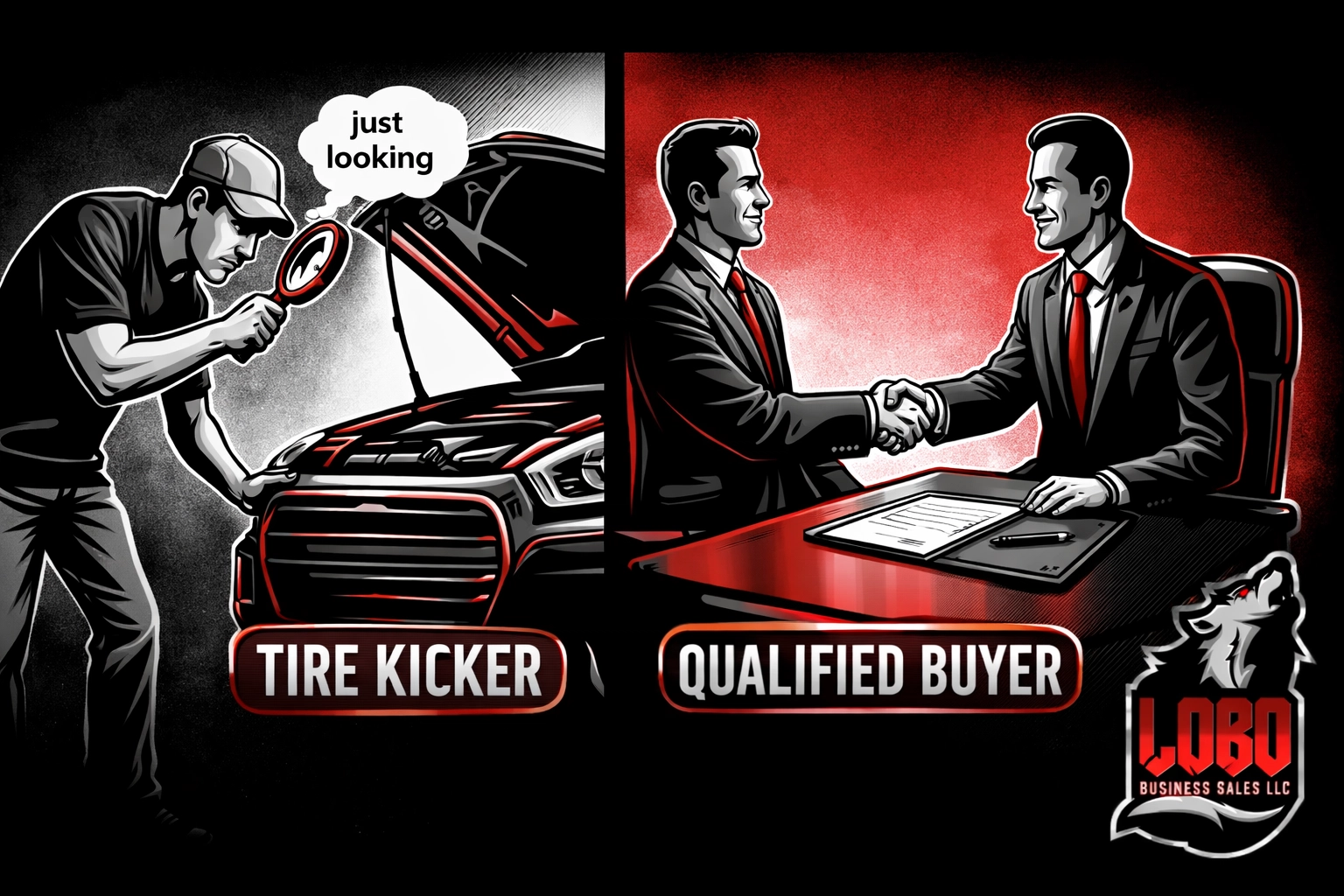
Not all buyers are real.
Some are competitors snooping. Some are dreamers with no financing. Some are "idea guys" who want to "partner" (translation: use your business as collateral for their fantasy).
And every unqualified buyer you entertain is a leak risk and a time suck.
Here's How to Spot a Tire Kicker:
🚩 Refuses to sign an NDA
🚩 Asks for financials before showing proof of funds
🚩 Wants to "think about it" for weeks
🚩 Has never owned a business but "always wanted to"
🚩 Asks vague questions and doesn't bring a team (accountant, attorney, lender)
Here's What Serious Buyers Do:
✅ Sign NDAs without hesitation
✅ Provide financial proof (pre-qualification letter, bank statements, etc.)
✅ Bring professional advisors (CPA, attorney, SBA lender)
✅ Ask detailed, intelligent questions
✅ Move quickly and decisively
A licensed business broker (like me) pre-qualifies buyers, protects your confidentiality, and filters out the noise so you only talk to serious, funded buyers who can close.
You don't have time to train amateurs. Let's focus on the real players.
🐺 Meet Your Strategy Partner

Dave Britton | Premium Business Broker | Tampa Bay & Beyond
I'm a licensed business broker living in Land O' Lakes with 15+ years of experience helping Florida business owners: especially restaurant owners in Hillsborough, Pasco, and Pinellas counties: exit successfully.
I'm a proud member of the Business Brokers of Florida (BBF) and the International Business Brokers Association (IBBA), and I specialize in positioning restaurants, franchises, and service businesses to attract high-value strategic buyers: not flippers, not tire kickers, not "I'll give you half cash and a promise" dreamers.
When you work with Lobo Business Sales LLC, you get:
✅ Confidential marketing that protects your staff, customers, and competitors from knowing you're selling
✅ Buyer pre-qualification so you only meet funded, serious buyers
✅ Strategic positioning that maximizes your SDE and multiples
✅ SBA deal expertise to navigate financing and close smoothly
✅ Negotiation firepower to get you top dollar: and keep it
I'm not here to list your restaurant and hope for the best. I'm your exit strategist, your confidential advisor, and your connector to the right buyer.
Let's talk before you list.
📞 Your Next Step: Book a Free 15-Minute Consultation
If you're a Tampa restaurant owner thinking about selling in the next 6–24 months, let's have a no-pressure conversation.
We'll talk about:
✅ What your restaurant is realistically worth
✅ The mistakes to avoid (and the moves that maximize value)
✅ How to position your business to attract premium buyers
✅ What a confidential exit process looks like
Book your free 15-minute consultation here: BOOK A CALL
Need a deeper dive? I also offer 30-minute and 1-hour strategy sessions for a minimal fee where we map out your entire exit plan, valuation drivers, and deal timeline.
Don't leave money on the table. Don't let staff leaks kill your deal. Don't sell to the first tire kicker who knocks.
Let's do this right.
Ready to Sell Your Restaurant the Right Way?
📍 Lobo Business Sales LLC
📧 Contact us at LoboBusinessSales.com
📞 (813) 395-9552
Your exit is too important to wing it. Let's build a plan that gets you paid: and gets you out.
#SellMyRestaurant #TampaBusinessBroker #WhatIsMyBusinessWorthInTampa #HillsboroughCountyBusinessBroker
Leave a Comment